
Why We Cook in 5kg Batches, Not 500kg Vats
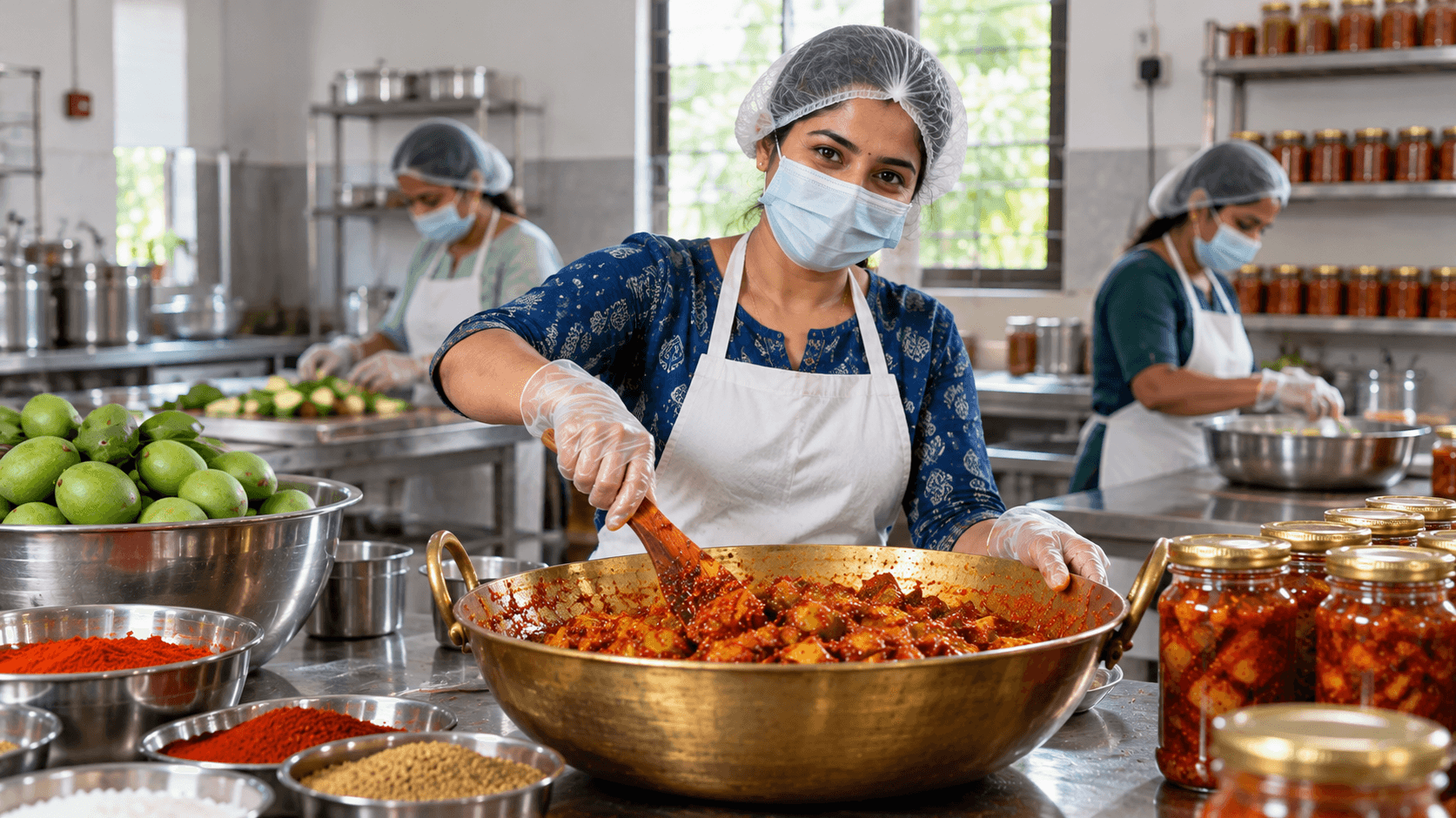
Large commercial pickle manufacturing typically happens in steel vats that can hold several hundred kilograms at once. It's efficient, and it's how most mass-market pickle brands scale — but it changes the texture and consistency of the final product in ways that matter for meat-based pickles specifically.
In a 500kg batch, heat distribution isn't even. Pieces at the bottom or near the heating element cook faster than pieces near the top or edges, which means some meat ends up overcooked and dry while other pieces are undercooked. Masala coating is also harder to distribute evenly at that scale — you end up with pockets that are over-spiced and others that are bland.
We cook in roughly 5kg batches in brass Uruli vessels — the same type of wide, shallow vessel used in Andhra home kitchens for generations, not an industrial fryer or vat. At that size, every piece of meat gets roughly the same heat exposure and the same amount of time in contact with the oil and masala, which is what gives a consistent texture jar to jar.
It also means someone is physically present and stirring through the whole cook, watching the meat and adjusting rather than running a timer on a machine. That's slower, and it caps how much we can produce in a day — which is a real tradeoff, not a marketing line. It's also the reason the texture stays closer to what you'd get cooking it yourself at home.